


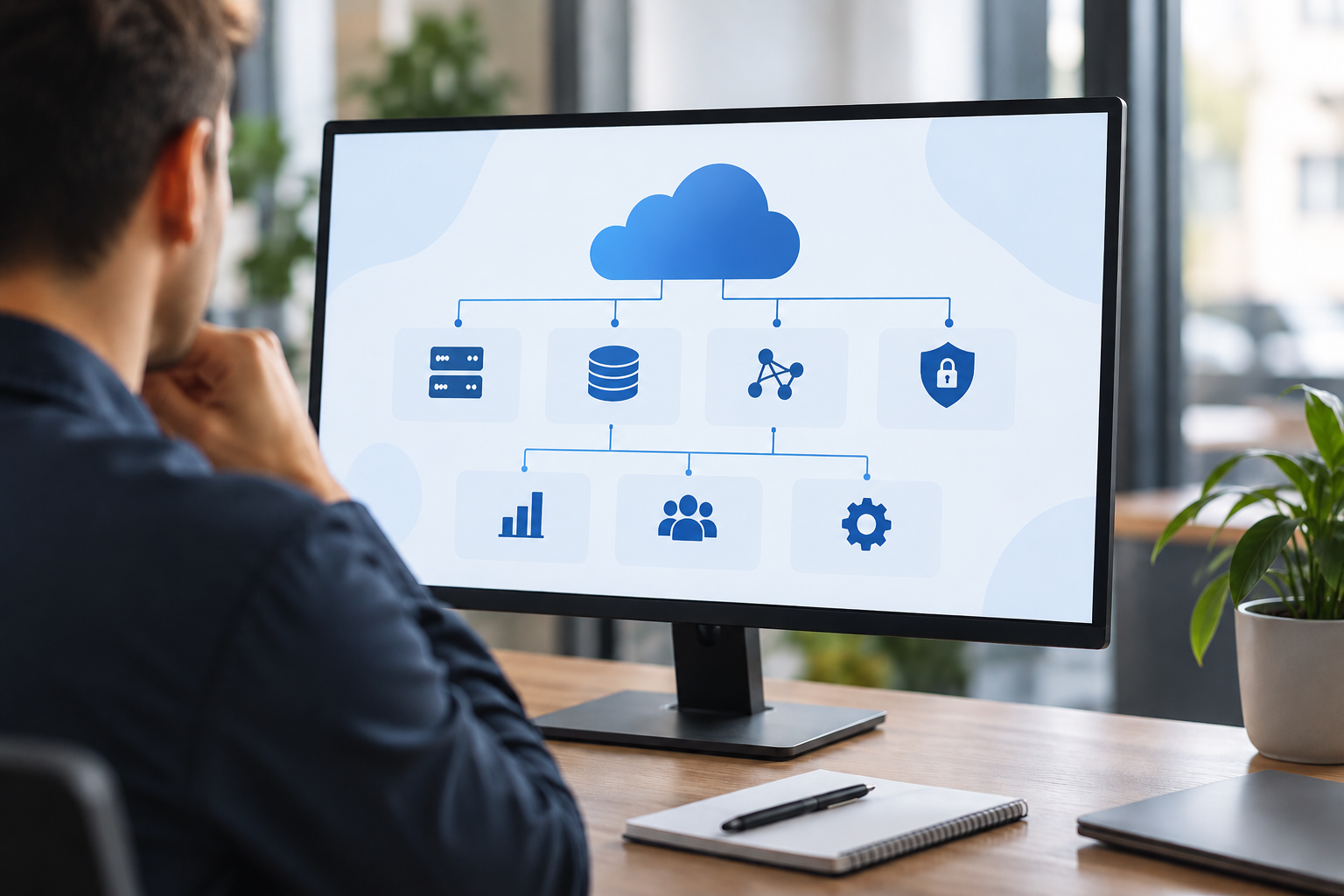
Cloud agnostic
Built on Kubernetes and open-source components.
Security by design
Zero Trust, identity and access management, ISO/IEC 27001 certification.
Resilience and scalability
Systems designed to handle high loads and minimize service interruptions.
GreenOps approach
Joint control over the costs and environmental footprint of your cloud infrastructure.
From field data to application
Sensors, industrial equipment, web or mobile business applications.
An agnostic cloud architecture, designed with you from scoping to run
We design, build, and migrate complex applications to the cloud. Our differentiator is based on a simple conviction: a cloud architecture should not lock a company into a single provider. We prioritize open-source components and technological abstraction layers, encapsulated in isolated containers and orchestrated within Kubernetes clusters. This agnostic approach involves a slightly higher initial implementation cost, but it guarantees a significantly lower long-term operating cost and true reversibility should you need to change providers.
Our technical stack reflects this logic: containerization with Docker and Kubernetes, infrastructure as code with Terraform and Ansible, and monitoring with Grafana, Prometheus, and ELK. Our continuous integration and deployment pipelines rely on GitLab CI or Jenkins, with deployments orchestrated via ArgoCD to maintain a clear audit trail of every change in production. On the development side, we work with Node.js, Angular, Java and Spring Boot, Python and Django, as well as databases like PostgreSQL or TimescaleDB for data-oriented systems. This expertise is combined with our DevOps, Machine Learning, and business application development skills, depending on the nature of the project.
At IT Link, we never separate cloud architecture from the network that connects it: the user terminal, connected industrial equipment, and the core cluster must form a reliable end-to-end chain. This is why we systematically integrate this expertise with our Network Architecture offering, as well as with Data Protection (GDPR) and functional safety requirements. This expertise is part of our broader Cloud offering, alongside Cloud Migration and Cloud Computing.
Our cloud engineers work in tandem with your technical teams: this close collaboration allows us to adjust choices throughout the project. It also facilitates future handovers, as your teams follow every technical decision from the start, rather than receiving a finished system that requires explanation after the fact.
Prêt à faire le point sur votre architecture cloud ?
Faire auditer mon architecture cloud
Our design methodology, from scoping to operations
We follow a structured process when designing cloud architectures, specifically tailored to secure your deployments and ensure a sustainable architecture. Whether you are starting from scratch, your project is already structured, or you are targeting a specific need, our engagement models adapt to your existing environment.
Analysis of the existing environment and technical assessment.
Refining requirements, developing business and technical scoping documents, and planning sprints and the transition roadmap.
Development and automation, continuous integration and deployment, followed by validation through load and scalability testing before any transfer of ownership.
Operations, maintenance in operational condition, and third-party application maintenance, with pre-defined service level agreements.
Resilience, scalability, and data governance
IT Link builds your cloud architectures on Kubernetes to facilitate horizontal scalability: resources adjust on demand, updates are deployed without service interruption, and a component failure does not cause the application to stop, thanks to redundancy across multiple availability zones. Our monitoring tools allow you to track resource usage in real time and anticipate adjustment needs, rather than discovering a load spike on your cloud bill at the end of the month. This cost control aligns with our GreenOps approach, which aims to reduce both the footprint and the cost of your cloud infrastructure.
We apply a simple principle: right-sizing rather than over-provisioning as a precaution. A component that is underutilized half the time represents an avoidable recurring cost, just like excessive redundancy on non-critical elements. We cross-reference consumption metrics with actual usage to identify these gaps and propose incremental adjustments rather than a complete overhaul, which is often riskier than it is useful for a system already in production.
Choosing a storage method depends directly on the nature of the data being processed: a relational database like PostgreSQL does not meet the same needs as a time-series database like TimescaleDB for industrial sensor streams. This approach is central to our Data Engineering expertise, particularly when projects involve the acquisition, storage, or processing of large data volumes.
Public, private, hybrid, multicloud: which model for which need?
We always make choosing the right model a prerequisite for any project. Public cloud shares infrastructure among multiple clients of the same provider, offering high elasticity and low initial investment. Private cloud reserves infrastructure for a single organization, providing greater control over security and data residency. A hybrid model combines both, while a multicloud architecture distributes workloads across multiple providers to reduce dependency on a single vendor. Our agnostic approach makes it easy to switch between these models without rewriting your existing setup.
IT Link integrates security by design into the technical documentation rather than adding it as an afterthought. This includes rigorous identity and access management, data stream encryption, and clear segmentation between production and testing environments, all aligned with our Cybersecurity expertise. This rigor is backed by our ISO/IEC 27001 certification. Responsibility remains shared with the cloud service provider, who secures the physical infrastructure, while access configuration and the protection of stored data are managed by your organization with our support.
Ready to build a scalable cloud architecture with our experts?
Request a callback
Industries we serve
These sectors demonstrate our cloud expertise, though they do not reflect its full scope.

Banking, finance, and insurance
Setting up data systems for data science needs, with continuous deployment designed for internal technical teams.
Defense
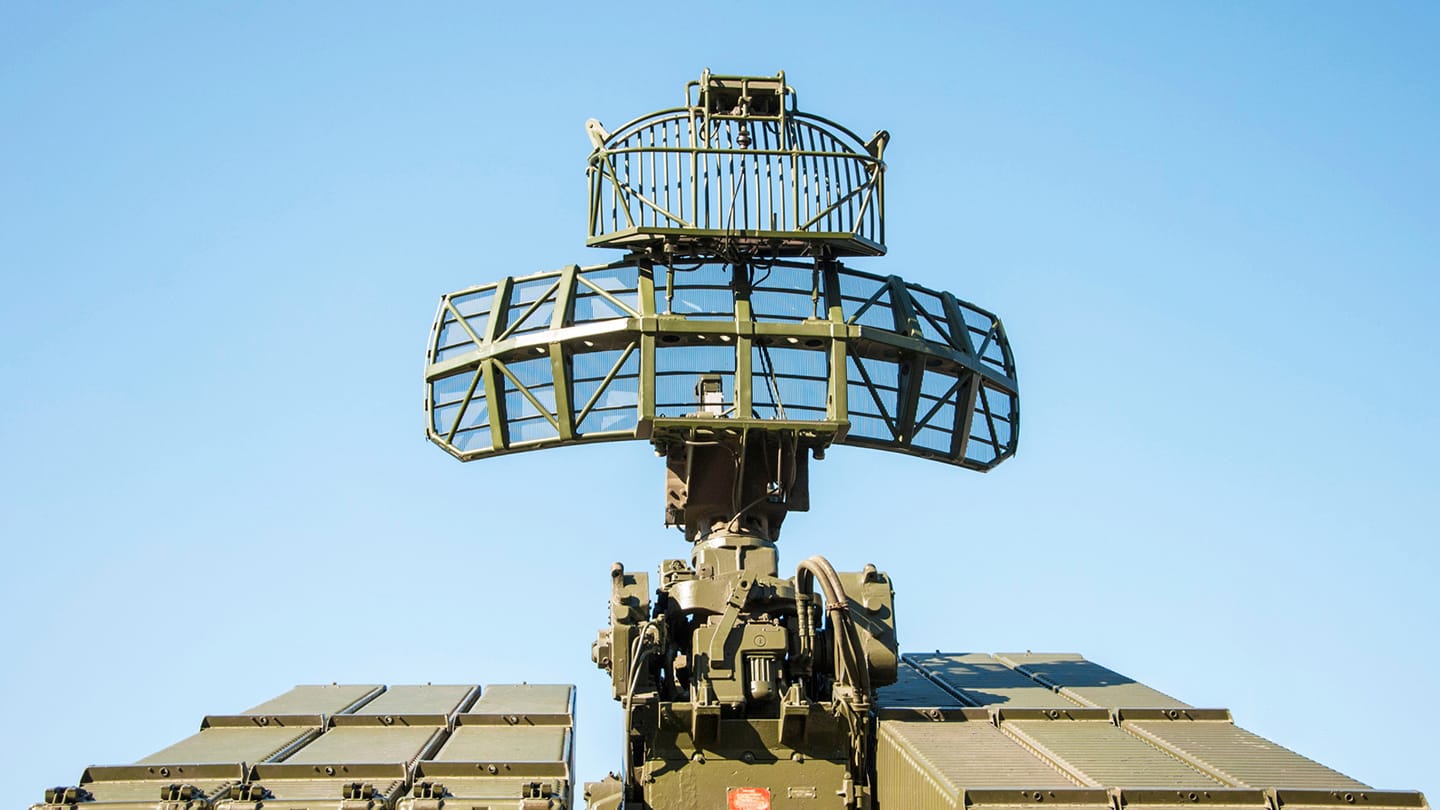
Private or hybrid cloud environments meeting sovereignty requirements and strict isolation of sensitive environments.

Energy
Deployment of public cloud solutions on Kubernetes and Terraform for organizations subject to strict traceability and service continuity requirements.

Industry 4.0
Data acquisition and predictive maintenance platforms, featuring a platform connected to industrial sensors and built on Kubernetes and time-series databases, in line with our IoT expertise. The data volumes generated by this equipment often require a rethink of the initial sizing once the project scales up.

Medical
Cloud environments hosting health data, HDS-certified, designed to balance service availability with strict regulatory obligations (GDPR, NIS2).

Public Sector
Migration of dedicated server infrastructures to managed cloud services, whether containerized or not depending on the nature of the applications, with a constant focus on sovereignty and hosting requirements.

Telecom
Cloud platforms sized to handle high and variable network traffic volumes, with a requirement for continuous scalability.

Transport
Cloud platforms for real-time monitoring and predictive maintenance of transport equipment, whether for rail or urban networks, with stringent requirements for continuous availability and large-scale sensor data processing.
Operations and upskilling your teams
Beyond this stage, we remain involved for the long term. Our teams support the transfer of skills to your internal staff so that operations do not depend exclusively on our presence. This close collaboration also facilitates day-to-day decision-making: adjusting storage modes, updating access, or revising service commitments without having to start from a new set of specifications every time.
In practical terms, this means regular check-ins with your technical teams, documentation kept up to date as things evolve, and on-call support available for critical incidents. We prioritize a gradual handover: as your teams become more autonomous, our involvement narrows to the areas that truly require it, without artificially maintaining dependency.
When cloud architecture hinders rather than drives growth
Many companies build their cloud architecture through successive layering or by delegating it to an infrastructure reseller that installs without truly designing. One project initiates a technical choice, a business application imposes another, and a cloud service provider chosen for a specific need ends up, by default, structuring a large part of the information system. The result is rarely coherent: a fragmented infrastructure, locked into a single provider, where each component applies its own security rules and deployment logic.
This drift carries a cost that goes beyond just the budget. Cloud environment loads become difficult to predict, technical resources escape real oversight, and security audits take longer than they should. Vendor lock-in gradually sets in, complicating any future move toward a multicloud architecture. Industry-specific interoperability standards—in sectors like healthcare, energy, and transport—add an extra layer of complexity when they haven't been anticipated from the start.
Internal teams feel the impact daily: developers spend a disproportionate amount of time working around the limitations of an undersized platform, and end users experience slowdowns during peak hours without the root cause being identified in the network or application infrastructure. Decisions made in haste, without a technical foundation or a holistic vision, limit the company's ability to scale its system effectively.
Discuss your roadmap with an IT Link cloud architect
Get in touch
Frequently Asked Questions
Responsibility is shared between the cloud service provider, which secures the physical infrastructure and part of the operating system, and the client company, which is responsible for access configuration, encryption, and identity management. A poorly defined contract often leaves this boundary blurred, which explains a large portion of the incidents identified during audits.
The choice depends on the criticality of the data, the budget available for managing multiple environments, and the internal team's maturity in cloud operations. A hybrid solution is suitable for a company that wants to retain control over part of its infrastructure. A multicloud architecture is better suited to the goal of reducing dependency on a single provider, at the cost of higher operational complexity.
Service commitments are negotiated before production, not after the first incident. They cover availability, response times, and the respective responsibilities of the cloud service provider and the managed services provider. A contract that does not detail these leaves the company exposed to ambiguous arbitration in the event of an outage.
This depends less on available technical skills than on the clarity of the business scope: the criticality of the applications involved, regulatory constraints, and the organization's ability to evolve its access management and monitoring processes. External support can compensate for a lack of maturity in a specific area without stalling the entire project. Conversely, a team already autonomous in cloud operations may only need occasional support, focused on the most critical strategic decisions.
The goal is not to cut costs at any price, but to eliminate wasteful spending: resources that are allocated but never used, excessive redundancy on non-critical components, and test environments left running indefinitely. These adjustments are made gradually, without compromising service availability, and typically result in a visible reduction in the cloud bill within months of implementation.
