



When network infrastructure hinders business performance
Corporate networks don't always crash. More often, they slow down, fragment workflows, and create chronic issues that IT teams end up absorbing rather than resolving.
The technical departments we meet often inherit infrastructure built in successive layers, lacking a cohesive vision. A local network originally designed for a few dozen workstations is expanded over the years to meet the needs of new sites and new use cases. The result: an illegible topology, poorly isolated segments, and network security that is impossible to guarantee without a structural overhaul.
Redesigning a network architecture is not a luxury; it is a response to concrete malfunctions: unexplained latency, the inability to properly segment IT and OT traffic, attack surfaces widened by legacy configurations, or the inability to integrate a new site without destabilizing the existing environment. For organizations where information systems are essential to production, these problems carry a direct operational cost.
Our approach to your network projects
From auditing existing systems to maintaining operational status, we use a structured approach to design networks that adapt to change without requiring systematic overhauls.
Mapping of actual traffic flows, measurement of utilization rates on critical links, and identification of bottlenecks. This phase establishes a precise diagnosis before any technical decisions are made, ensuring the solution is tailored to the organization's real-world needs.
Definition of topology, logical and physical segmentation, IP addressing, selection of routing protocols, and equipment sizing. Cybersecurity and data protection are integrated at this stage, not added as an afterthought.
Equipment configuration, implementation of network services (DNS, DHCP, VLAN, QoS), integration with cloud environments, and load testing prior to production rollout.
Delivery of comprehensive operational documentation and an architecture scaled to accommodate future growth without requiring systematic overhauls. Reliability is prioritized for high-availability environments.
Why trust IT Link with your network projects?
Engineers trained for constrained environments
Defense, healthcare, industry, energy: our teams work on infrastructures where a design error has measurable operational consequences. This requires a higher level of rigor than a standard office network, and our Linkers reflect that.
A cross-functional view of the system, not just the network
Network architecture cannot be optimized in a silo. Our engineers work closely with security, cloud, and IT systems teams to ensure overall consistency, particularly during transformation projects where multiple system lines evolve in parallel.
Topologies, models, and network architecture choices
Our sectors of expertise
IT Link works with network architectures subject to strict technical or regulatory requirements. The examples below illustrate typical scopes and do not limit our field of expertise.

Automotive
Traffic segmentation between production, testing, and office environments on lines where the slightest cross-segment contamination has immediate consequences.
Defense
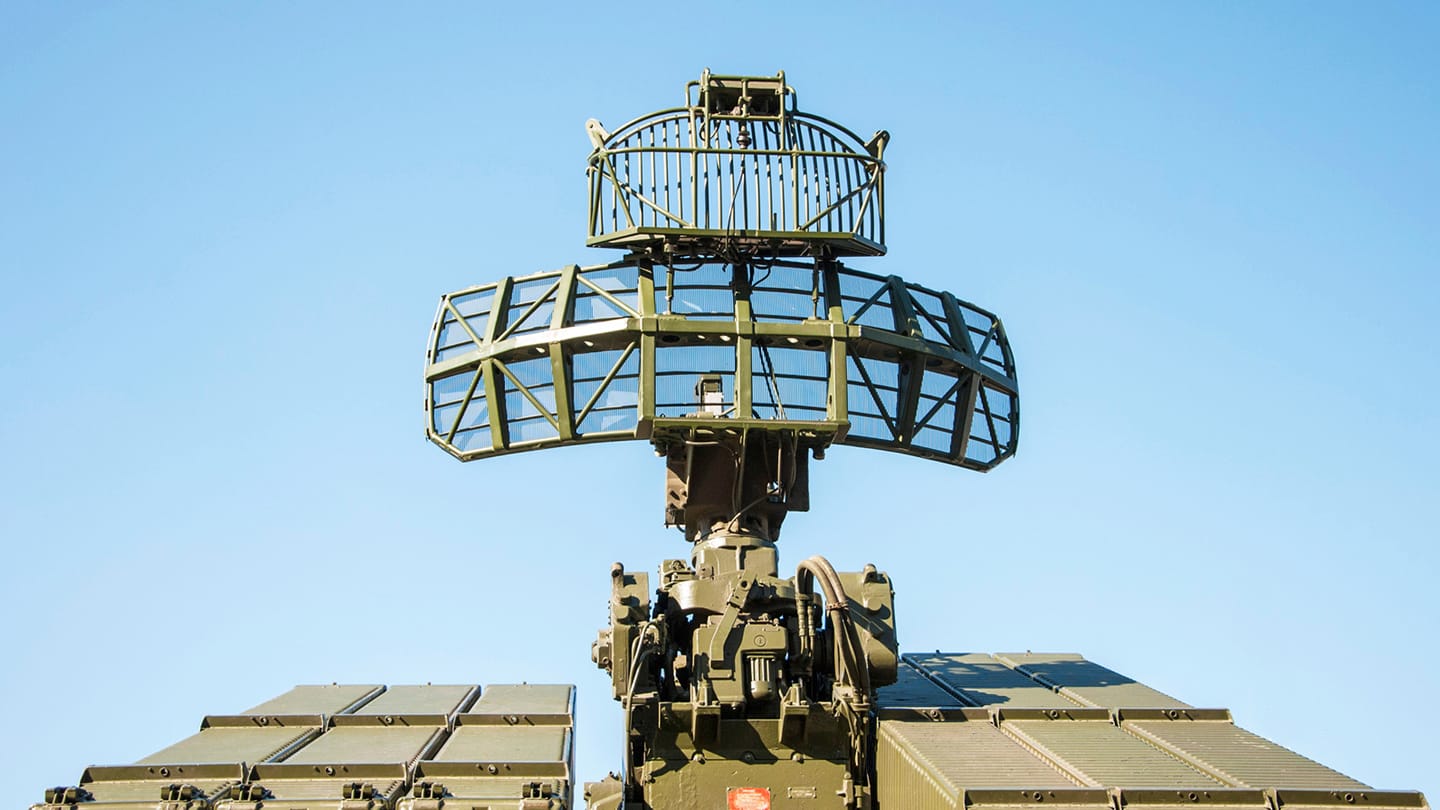
Air-gapped networks compliant with industry standards (RGS, NATO standards, ANSSI), featuring hardened configurations and access traceability.

Energy
IT/OT separation to enable field data collection without exposing industrial control systems.

High-tech
Architectures adapted to rapid innovation cycles, with protection for R&D workflows and remote access.

Industry 4.0
IT/OT segmentation with control over industrial protocols (OPC-UA, Profinet, EtherNet/IP) and Purdue-style architectures.

Healthcare
HDS and ISO 27001 compliant architectures, with access management tailored to clinical requirements and continuity of care.
Frequently asked questions
Evaluation begins with an audit of the existing infrastructure: mapping actual traffic flows, measuring utilization rates on critical links, and analyzing incidents from the past 12 to 24 months. This phase allows us to design an appropriate response and distinguish between issues related to sizing, configuration, or structural limitations. It defines the project scope and budget, preventing unnecessary overhauls when a targeted reconfiguration would suffice.
External support is justified whenever a project exceeds internal capabilities, deadlines are incompatible with current team workloads, or reliability requirements demand immediately operational expertise. This is particularly relevant for multi-site network architecture redesigns, environments with strict regulatory constraints, and IT/OT integration projects where mastery of industrial protocols is essential.
Well-implemented VLAN segmentation, combined with strict filtering rules between the two environments, allows for operational isolation while still permitting necessary traffic. The challenge lies in precisely defining which flows cross the IT/OT boundary, in which direction, and with what authentication. The operational reliability of OT equipment imposes constraints that traditional IT security approaches do not always cover.
MPLS provides contractual quality-of-service guarantees and traffic isolation, which is relevant for critical data flows between sensitive sites. Its primary drawbacks are cost and rigidity when it comes to architectural changes. SD-WAN allows for the combination of multiple link types and the application of dynamic routing policies based on real-time performance. Both solutions frequently coexist on the same corporate network, with segmentation based on criticality levels tailored to each organization's needs.
