Cloud

IT Link supports you in building a cloud infrastructure tailored to your needs and secured for your data.

Cloud Architecture

Cloud computing

Cloud Migration

Our approach

Whether you are starting from scratch, have a structured project already in place, or are targeting a specific need, our Linkers tailor their support to your existing setup. Artificial intelligence is integrated into every step to accelerate repetitive technical tasks, all within an ISO 27001-certified framework.

  • We assess your current infrastructure, including actual usage, data volume and sensitivity, and the security and compliance requirements specific to your industry. This audit highlights the gaps between your current situation and your objectives.

  • We formalize your requirements and constraints, including the technical, regulatory, and budgetary trade-offs that will guide your choice of model, provider, and architecture.

  • We handle the technical implementation of your cloud project, from design to deployment, including all necessary availability and resilience testing before go-live.

  • We support the ongoing management of your infrastructure once in production, adjusting resources to match actual usage and anticipating your evolving needs.

  • Our engineering process leverages AI at every stage, whether used independently or in combination: AI-assisted configuration generation, proactive regression detection before deployment, and the industrialization of security and compliance checks. This approach accelerates repetitive technical tasks without ever replacing human review for critical infrastructure points, and without any dependency on proprietary LLM providers.

Get a diagnostic of your cloud infrastructure

Request a callback

Cloud expertise combined with industrial field experience

Our cloud teams draw on over 40 years of engineering experience in mission-critical environments, including transport, energy, healthcare, defense, and the public sector. This proximity to the systems that generate data at the source—such as sensors, PLCs, and embedded equipment—shapes the way we design cloud architecture. When your infrastructure needs to integrate data streams from sensors or automated systems, we ensure that data collection, synchronization, and processing are built in from the start. For environments subject to operational safety constraints or sector-specific regulatory requirements, this deep understanding of industrial operations helps eliminate blind spots.

Nos expertises cloud

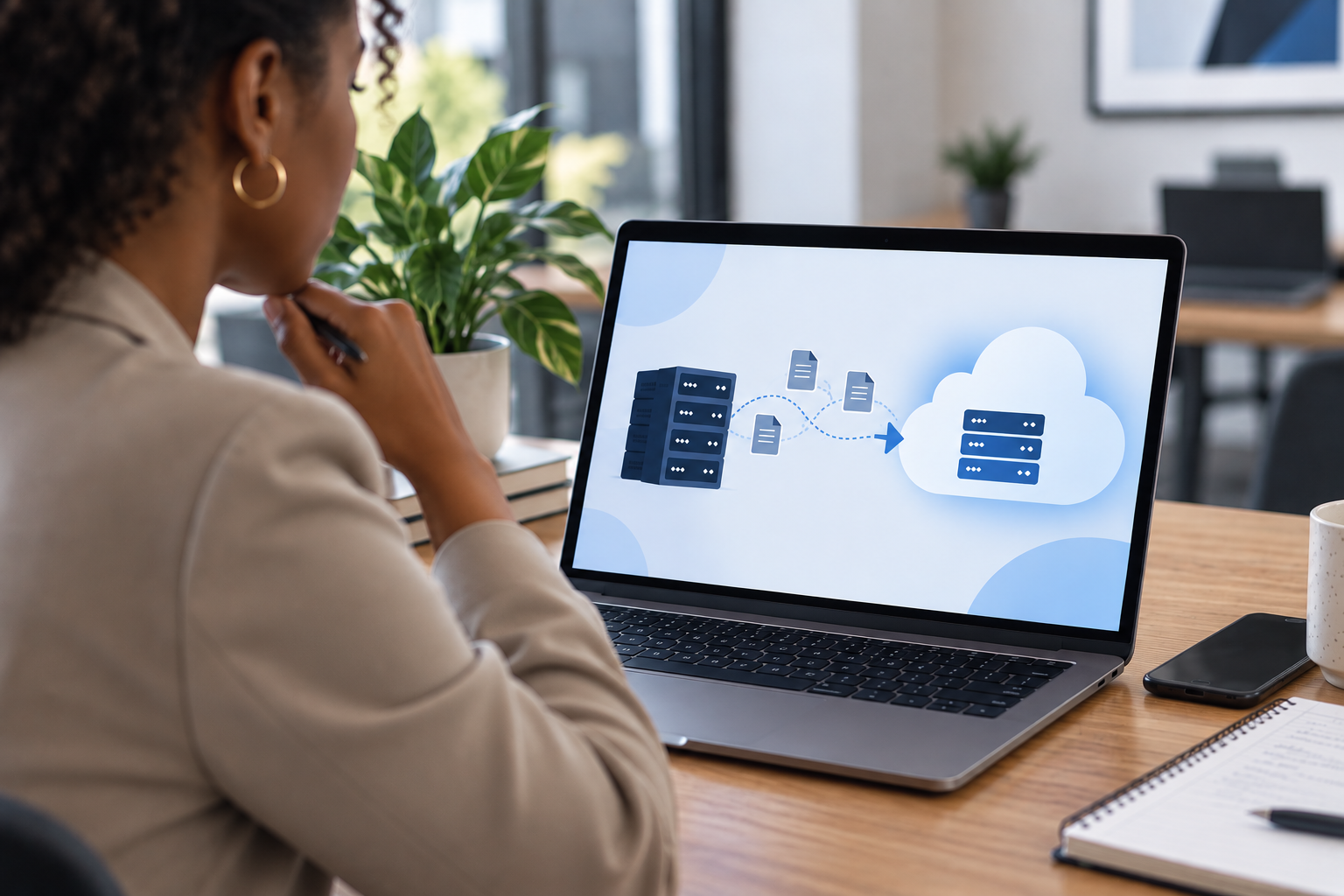
Cloud Migration: moving to the cloud without service disruption

We build every migration on precise scoping and a gradual cutover plan, tested environment by environment. This is what distinguishes a well-managed project from an improvised switch, where service interruptions, data loss, and technical incompatibilities delay the project by months.

Slide 2 of 3.
1
2
3

Cloud Computing: IaaS, PaaS, SaaS, which service level is right for your business?

Whether Infrastructure (IaaS), Platform (PaaS), or Software (SaaS), these service levels—accessible without investing in physical servers—adjust to your actual usage. For IaaS and parts of PaaS, we design them as orchestrated containers (Kubernetes, Docker) to ensure portability from one provider to another.

Cloud Migration: moving to the cloud without service disruption

We build every migration on a precise framework and a phased cutover plan, tested environment by environment. This is what distinguishes a controlled project from an improvised transition, where service interruptions, data loss, and technical incompatibilities can delay a project by months.

Cloud Architecture: designing infrastructure aligned with your constraints

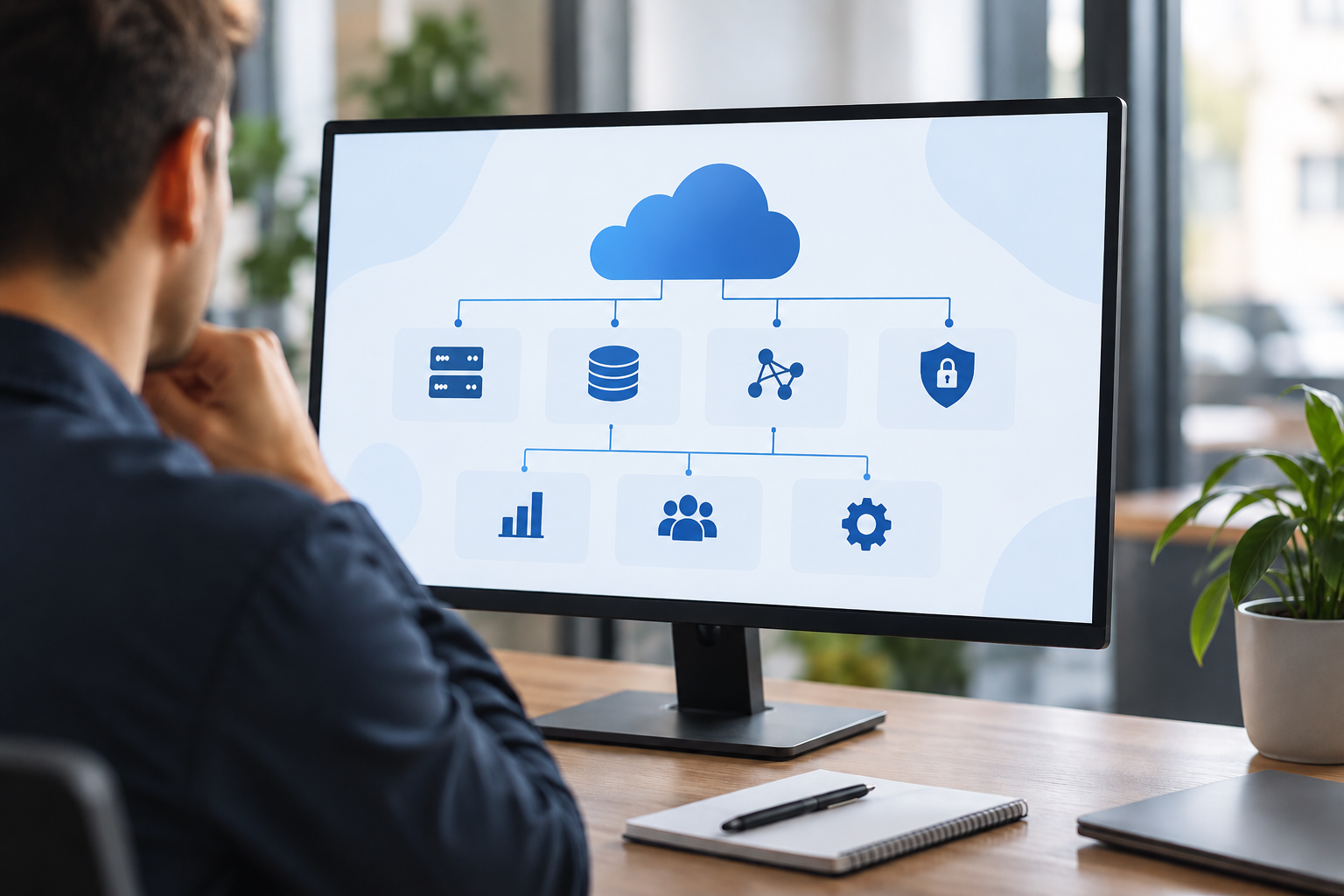
From network topology, identity management, and load balancing to disaster recovery mechanisms, we deploy this architecture using an Infrastructure as Code approach (Terraform, Ansible). We use containerization and orchestration (Docker, Kubernetes) where appropriate to ensure your environment is reproducible and portable across cloud providers.

Costs, security, and lock-in: the trade-offs of enterprise cloud

Adopting a cloud solution transforms how you manage your infrastructure, but every choice commits you for years to come. A poor choice of provider, an undersized architecture, or a loose security policy can quickly lead to unexpected costs, poorly protected data, or technical lock-in that is difficult to undo. You must weigh several models—public, private, or hybrid cloud—each with its own advantages and limitations regarding cost, control, and performance. Storing sensitive data further complicates the equation if your business is subject to strict compliance requirements. GDPR mandates specific guarantees regarding data location and encryption, which rules out certain providers or necessitates specific configurations. For entities subject to the NIS2 directive, additional obligations regarding resilience and incident reporting also directly impact the choice and configuration of your cloud infrastructure. On top of this is day-to-day management: service availability, updates, access monitoring, and the ability to handle usage spikes without degrading performance. Many companies discover too late that a poorly managed cloud infrastructure costs more than a traditional internal environment, especially when resources are not aligned with actual needs.

Our stacks and partners

We have established strategic partnerships with leaders in cloud and digital workplace solutions.

Industries served

Our cloud services span many industries; the ones featured here provide a practical overview, but do not limit our scope of expertise.

  • Banking, finance, and insurance

    Cloud architecture combined with enhanced encryption for your transactional flows, subject to strict regulatory constraints.

  • Defense

    Sovereignty and confidentiality requirements that point toward private cloud environments or qualified French providers.

  • Industry 4.0

    Data collection from industrial sensors and PLCs, with cloud architecture scaled for continuous IoT stream ingestion.

  • Professionnel de santé vêtu d'une blouse blanche et d'un stéthoscope rouge lisant un document à l'intérieur.

    Healthcare

    Hosting of health data subject to specific security standards, with enhanced encryption and access traceability.

  • Public sector

    Digital sovereignty requirements, focusing on cloud solutions hosted in France or in SecNumCloud-qualified environments.

FAQ

  • The choice of deployment model depends on your specific constraints. The public cloud offers immediate elasticity and variable costs, making it well-suited for projects that need to start quickly or for workloads with high variability. The private cloud gives you more control over infrastructure and data, an option often necessary if your sector is subject to strict regulatory requirements. The hybrid cloud combines both approaches: your sensitive data remains hosted in a private environment while less critical workloads benefit from the elasticity of the public cloud. This choice shapes the entire project, from the provider selected to the technical design of the infrastructure.

  • The cost depends on the chosen model (public, private, hybrid), the volume of data stored, and the required security level. A public cloud reduces initial investment but generates variable usage-based costs, while a private cloud involves a higher investment in exchange for enhanced control. A preliminary audit allows for an accurate estimate of the actual cost before any commitment.

  • Vendor lock-in, loss of control over certain infrastructure layers, and security vulnerabilities due to poor access management are among the most common risks. Proper technical scoping and an architecture designed to minimize proprietary lock-in reduce these risks from the outset.

  • This depends on your sector and the sensitivity level of the data being processed. Companies subject to sovereignty requirements (public sector, defense, certain healthcare or finance entities) should consider a French provider or one with SecNumCloud certification. For other use cases, an international provider remains a viable option, provided that data encryption and location are contractually controlled.

  • An effective backup strategy combines geographic replication, data versioning, and regular restoration testing. The choice of frequency and level of redundancy depends on the criticality of the data and the acceptable recovery time in the event of an incident.

Contact us
Do you have a new and innovative project? Let's talk about it!

Fields marked with an asterisk are required.

Expected format: name@company.com
Expected format: 10 digits with or without spaces, or an international number with country code.
Thank you for your request, you will receive an email from us.
Contact us
Do you have a new innovative project? Let's talk about it!

Fields marked with an asterisk (*) are required.

Thank you for your request, you will receive an email from us.
Oops! Something went wrong while submitting the form.
Go up to the top of the page